From WM to 4-2-3-1: Why Football Formations Keep Changing
WM to 4-2-3-1 formation changes make more sense when you trace how roles and responsibilities shift, not just how the numbers on a team sheet change.
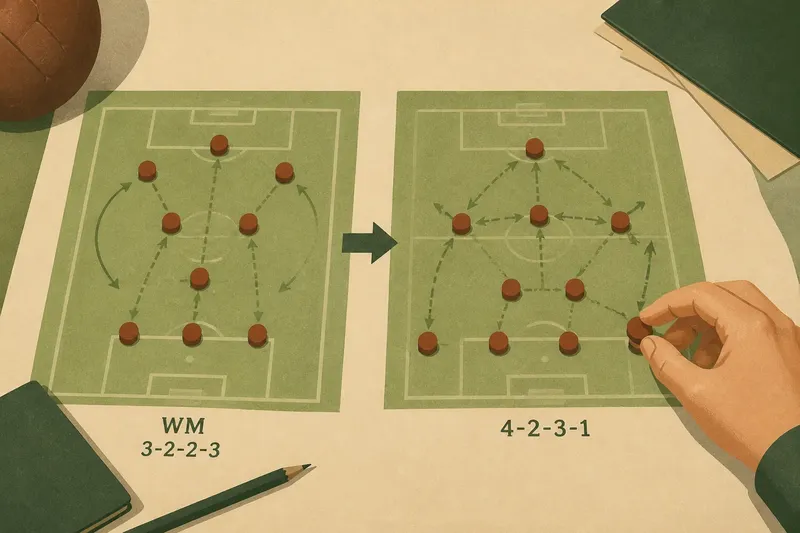
What changed between the WM and 4-2-3-1, beyond the numbers on the team sheet? The WM to 4-2-3-1 shift is best understood through the roles players were asked to perform: who guarded the center, who covered wide space, and who connected defense with attack.
WM to 4-2-3-1 roles
The WM is commonly drawn as a 3-2-2-3: three defenders, two deeper midfielders, two inside forwards, and three advanced attackers. Its shape organized players around the needs of its era, but the drawing alone cannot explain how a team defended or attacked. The relationships between those players mattered more than the letters in the formation’s name.
Herbert Chapman is closely associated with the WM at Arsenal. The system is often discussed alongside the 1925 change to the offside law, which reduced the number of opposing players required between an attacker and the goal line for that attacker to be onside. The law change, the WM’s development, and its adoption were part of a broader tactical history; it is too neat to treat one rule as the sole cause of a formation.
In the WM, the center half occupied a deeper central position than the name “half” might suggest. He could confront the opposing center-forward, while the other defenders and the wing halves had to account for nearby threats and open space. Those assignments helped make the back three a recognizable defensive unit.
Central marking and cover
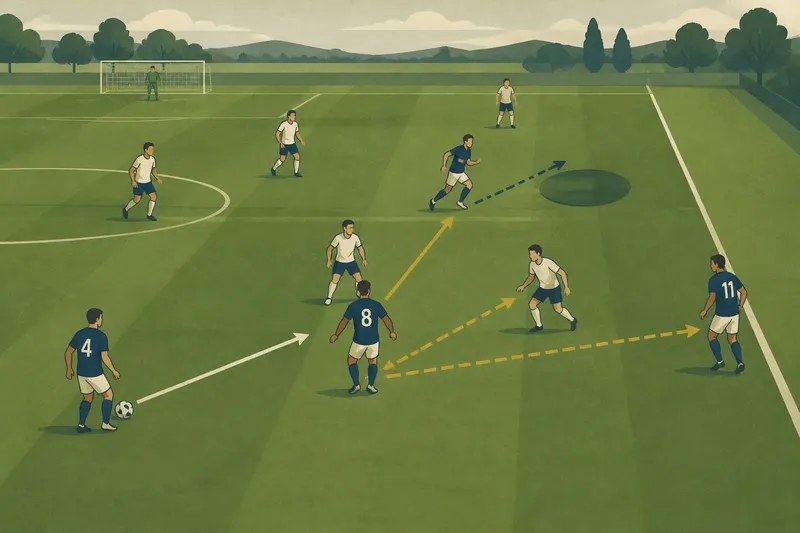
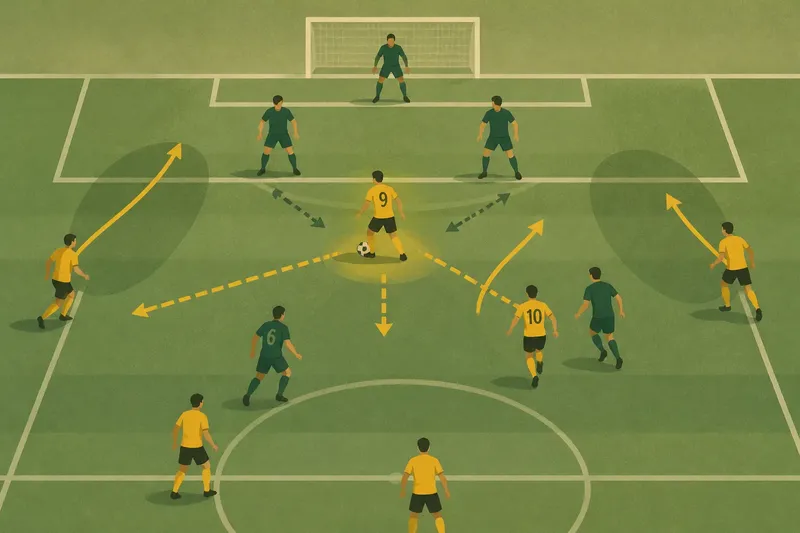
Assigning a defender to a striker creates a useful question: what happens when the striker moves? If the defender follows, space may open behind or beside him. If he holds his position, the striker may receive room elsewhere. The other defenders and midfielders must read the movement and adjust rather than simply preserve their starting spots.
The WM’s two deeper midfielders also faced competing tasks. They could help protect central areas, connect possession, or respond to opponents moving wide. The balance depended on the players and the match. A formation name cannot tell you whether a midfielder was expected to hold, press, or cover a teammate’s movement.
Back four responsibilities
As teams used back fours, defensive work was arranged differently. Two center backs could share attention to central attackers, while fullbacks dealt with wide threats and sometimes supported attacks. This redistributed responsibilities rather than removing the problem of covering space.
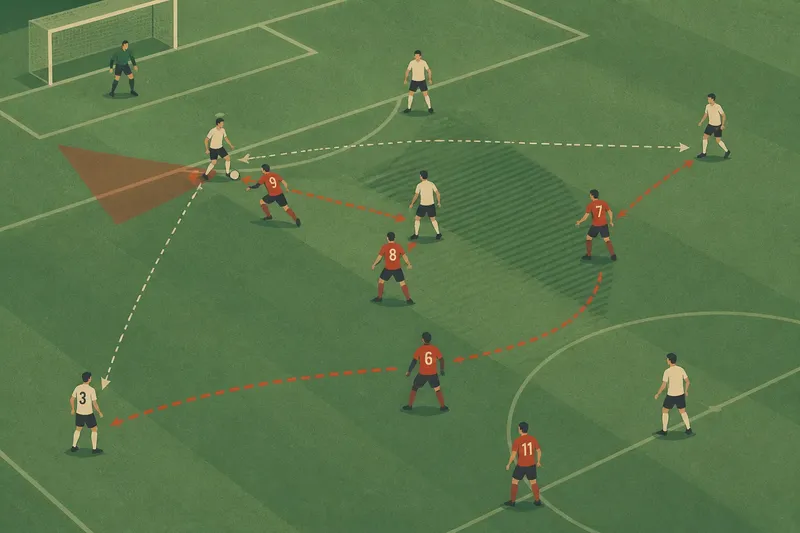
A fullback moving forward can leave room on the flank. A center back stepping out can expose space behind. Teammates need to shift or hold their positions to cover the opening, and the precise response depends on where the ball and opponents are. The useful unit of analysis is not the isolated role but the adjustment it requires from nearby players.
Say an invented team starts in a 4-2-3-1, with its right fullback joining an attack. The nearest central midfielder shifts toward the right channel, while the left fullback stays deeper. The expected observable result is that the team has more players positioned to guard against a counterattack on the right, at the cost of leaving fewer players close to the left side of the attack.
Midfield layers and tradeoffs
Midfield arrangements divide work among protecting the defense, advancing the ball, creating chances, and pressing opponents. A pair, a triangle, or staggered positions can distribute those duties, but no arrangement makes them disappear.
In a 4-4-2, two central midfielders share the middle and wide midfielders can help cover the flanks. Against an opponent with three central players, the pair may need support. A forward can drop, a wide player can move inside, or a midfielder can step higher; each choice changes the space left elsewhere.
A holding midfielder behind two advanced central players offers another set of relationships. If the higher players move too far ahead, the holding player may be left with too much ground to cover. If they stay close, the forwards may become separated from midfield. Coaches are choosing where to accept risk, not removing it.
What changed between systems?
Did the WM directly become the 4-2-3-1?
No. The 4-2-3-1 was not a direct conversion of WM positions into modern equivalents. Different rules, tactical ideas, player abilities, and match plans shaped the systems used along the way.
What role did the offside change play?
The 1925 rule change altered the conditions for an attacker to be onside, and it is commonly discussed as part of the tactical context around the WM. Avoid reducing the formation’s origins or effects to that change alone; historical accounts should distinguish the rule itself from the varied ways teams responded.
Why use two deeper midfielders?
A pair can share central coverage and help move the ball from defense, with one player sometimes advancing while the other holds position. Their roles depend on the teammates around them and the space the opposition threatens.
Is the 4-2-3-1 always defensive?
No. The same starting arrangement can support a high press or a more cautious block. The fullbacks’ positions, the midfielders’ movement, and the work of the three players behind the striker determine how it behaves.
Formation numbers in context
It is not worth treating each formation as a rung on a ladder from primitive to sophisticated. The WM was not merely an obsolete diagram, and a four-defender system is not automatically more intelligent. Each arrangement makes some responsibilities easier to assign while leaving different spaces for opponents to target.
Nor do the numbers describe pressing, marking, or attacking routes by themselves. A team listed as 4-2-3-1 might defend in a compact shape, then send a fullback into midfield during possession. Another team with the same label might keep its wide attackers high. The starting arrangement is only one part of the picture.
To understand the WM to 4-2-3-1 change, follow the role rather than the label: note who leaves the line, who covers the space, and how the next player adjusts. That gives a clearer account of a formation’s purpose than treating football’s tactical history as a simple sequence of numbers.