Watching a Counterattack: Follow the First Pass After the Turnover
Follow the first pass after a turnover to see how a counterattack chooses its route, sets its tempo, and turns a loose ball into a purposeful break.
What does the first pass after a turnover tell you about a counterattack? Watching the first pass after a turnover reveals whether a team is trying to run into space, connect with a forward, or pause long enough to secure the ball. The direction, recipient, and weight of that delivery show the route the team has chosen and the tempo it can sustain.
The ball may change hands amid bodies and hurried touches. The passer might turn toward a teammate already moving, play into a forward’s feet, or send the ball into open grass. Each choice solves a different problem. Start with the turnover, find the first forward pass, then follow what the receiver can do next.
Find the turnover
A counterattack begins when possession changes, but the change is not always a clean tackle followed by a clear pass. An interception, a loose ball gathered by a midfielder, or a goalkeeper collecting a cross can all create the opening. Establish who has control and whether the opponent is still organized enough to press or recover.
It is easy to start watching only when the receiver gets a breakaway pass. That skips the decision that shaped the attack. Look for the player who first gains a usable touch, then follow the next action. A clearance that drops to a teammate may be the important recovery; a deflection that reaches an opponent may not yet amount to secure possession.
If the camera stays tight, nearby players offer clues. Teammates accelerating away from the ball may be preparing a route; opponents turning toward their own goal are beginning to retreat. A quick forward touch alone does not make a counterattack. The team also needs an opportunity to exploit the opponent’s transition from attack to defense.
Read the first pass
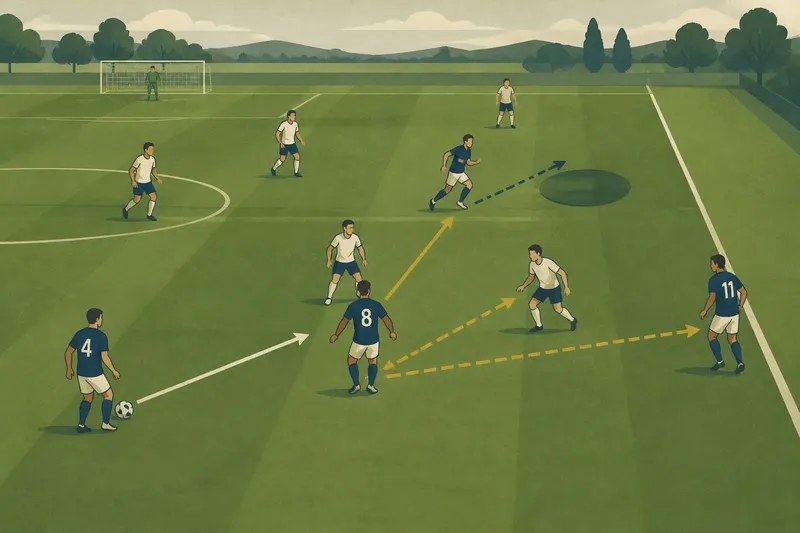
The first forward pass is the first deliberate delivery that advances the newly possessing team toward the opponent’s goal. It may travel diagonally, straight ahead, or into a channel behind a defender. A sideways touch to escape pressure can come first; keep watching until the ball moves forward. That sideways touch can still matter by giving the passer time or a better angle.
- Direction: Does the ball go toward the center, a flank, or space behind a defender? If it enters open space, look for a runner; if no runner can reach it, the route may be a hopeful clearance rather than a usable break.
- Recipient: Is the receiver facing forward, shielding with a defender close, or running onto the ball? If they can turn or continue forward, watch for acceleration; if they are closed off, look for a layoff or a reset.
- Weight: Can the receiver carry the ball at speed, or must they stop and wait for support? If the pass meets the runner in stride, the attack can keep its pace; if it arrives behind them, expect a slower touch or a contest for possession.
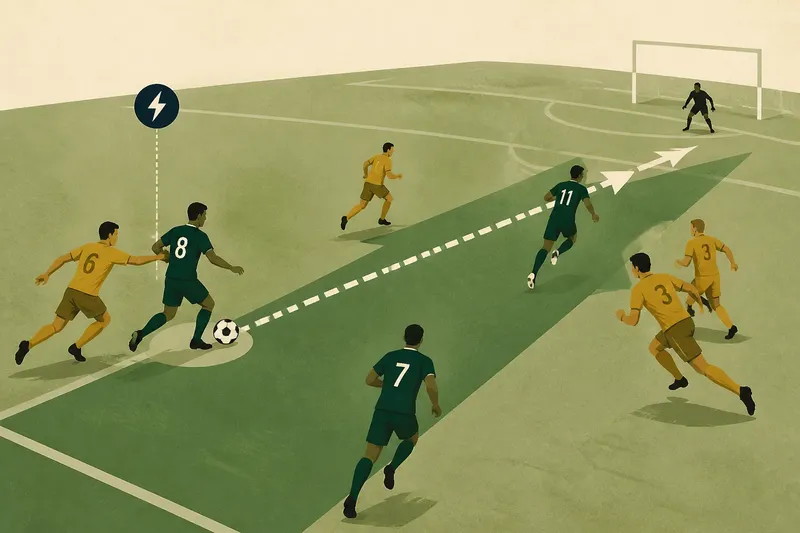
Two passes can travel similar distances and create very different breaks. A firm ball into a runner’s path invites immediate acceleration. A pass into a player’s feet may let the team secure possession, but if the receiver needs several touches to turn, defenders gain time to regroup.
Say a team wins the ball near the right touchline, an opponent closes from behind, and a teammate runs through the inside channel. The ball-winner plays diagonally ahead into that runner’s path. The runner can then face goal while recovering defenders turn and chase. If the pass arrives behind the runner, the route is still clear, but the runner must slow down to collect it, giving defenders a chance to close the gap.
Explain a stalled break
An attack can look fast without making useful progress. Often, the first pass reaches someone facing away from goal or with little room to turn. A quick delivery cannot compensate for a receiver who must protect the ball and wait.
Check the receiver’s body position as the pass arrives. If a defender blocks the forward route, see whether a teammate offers another option or the ball is recycled sideways. That next action helps distinguish a deliberate effort to keep possession from a route that has been shut down. Resetting is not necessarily failure; it may be the sensible response to a closed lane.
Another snag is a pass into open space with no runner close enough to reach it. The passer may have spotted the gap but misjudged the teammate’s starting position or the ball’s path. Follow the ball to its destination rather than assuming the intention succeeded. If an opponent collects it, the attempted break has become another turnover.
A receiver may also slow down after an accurate pass. Look for pressure arriving from the side, a difficult first touch, or a lack of nearby support. Those clues explain the change in tempo more clearly than saying the player lacked urgency. The next action shows whether a teammate takes over the run, the receiver carries the ball, or the team protects possession.
Route and tempo questions?
Why does the first pass go wide?
A wide pass can avoid a crowded center and give a runner room to advance. Watch whether the receiver can get beyond the opposing fullback or is forced toward the touchline, where space narrows.
What does a pass into a forward’s feet mean?
It can secure the ball and let the forward shield it while teammates join. A layoff that releases a runner keeps the break moving; a turn into traffic may slow it.
How can I tell whether the team is rushing?
Compare the pass’s pace with the receiver’s position and the defenders’ movement. If the ball arrives before the teammate can set themselves, or forces them to stop as pressure arrives, the delivery may have been hurried rather than deliberately direct.
When does a counterattack end?
The initial break has usually ended once the defense has settled into a compact shape and the attackers circulate the ball without a clear forward route. Watch for a fresh opening rather than treating every later attack as part of the same transition.
Separate intent and outcome
A useful reading distinguishes what the pass tries to do from what happens next. A ball into space behind a defensive line signals an intention to send a runner beyond it; whether the runner reaches the pass depends on its accuracy and timing, as well as the defenders’ recovery. A pass to feet can be a deliberate way to keep control, even if it does not produce an immediate chance.
This distinction avoids blaming the passer for every stalled break. The receiver might miscontrol a good delivery, or a defender might close the route in time. A poor pass can also lead to a shot if a teammate rescues it. Describe the sequence plainly: where the ball went, what the receiver could do, and how the opposition responded.
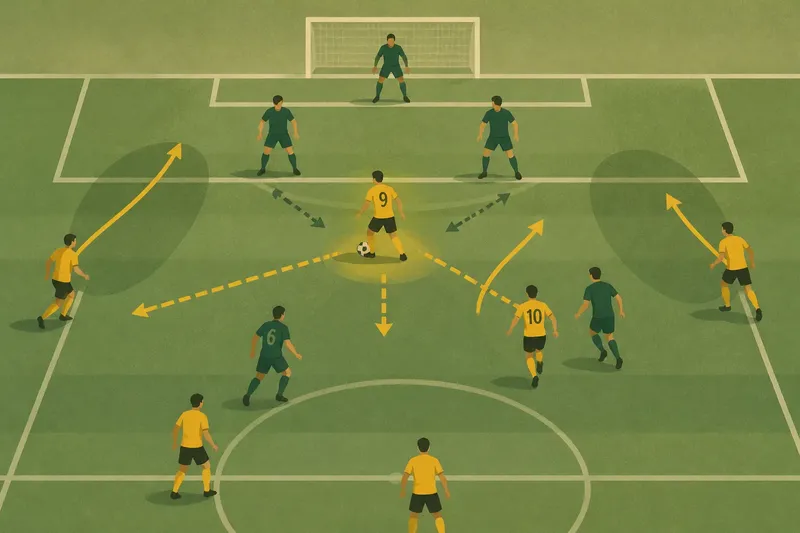
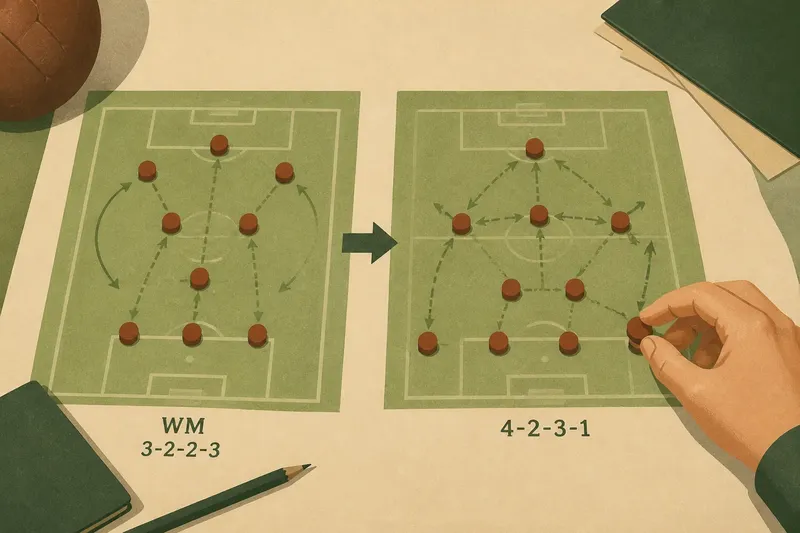
It is not worth identifying every formation or naming every role during the first few seconds. Those details help when they explain a passing lane, but they are secondary to the immediate question: did the first forward pass give someone a usable way to advance? Keep attention on that decision and its consequences.
Build a viewing routine
Use these observations to decide what happened at each point of the transition:
- Possession: Check who first controls the loose ball. If a teammate secures it, follow their next action; if an opponent does, the counterattack has not begun for that team.
- Pressure: Check whether a defender is close enough to challenge the ball-winner. If pressure is immediate, expect a quick release or protective touch; if there is room, look for a deliberate forward pass.
- Forward route: Check whether the first forward pass goes toward a runner, a forward’s feet, or an open channel. If a teammate can receive it, track their next move; if nobody is available, watch for a reset or a turnover.
- Pass weight: Check whether the ball lets the receiver continue at speed. If it reaches them in stride, follow the run; if it makes them stop or turn back, note how much time the defense gains.
- Receiver’s next action: Check whether they carry forward, lay the ball off, shield it, or lose control. If they preserve a forward option, stay with the attack; if the lane closes, watch whether the team resets or loses possession.
- Defensive response: Check whether opponents retreat, press, or recover a compact shape. If they are still turning toward their own goal, the break may remain on; if they have settled and blocked forward lanes, treat the initial counterattack as over.
Watching the first pass after a turnover gives you a clear starting point, not a verdict on the whole attack. Follow it through the receiver’s next action to see whether the team gains forward momentum, protects the ball under pressure, or finds its route closed. The defense’s movement tells you whether the opening is still available, even when the ball itself has moved away from the space that first invited the break.